Develop a beginner’s mind
Five free mini classes to help you get started
We all know we need to exercise and move our bodies more, but sometimes we are not in the mood. There are days when it can take a lot of energy to get up, put down your cup of tea, and choose something different.
So, forget about being ‘good’ and spend a small amount of time moving your body in new and simple ways.
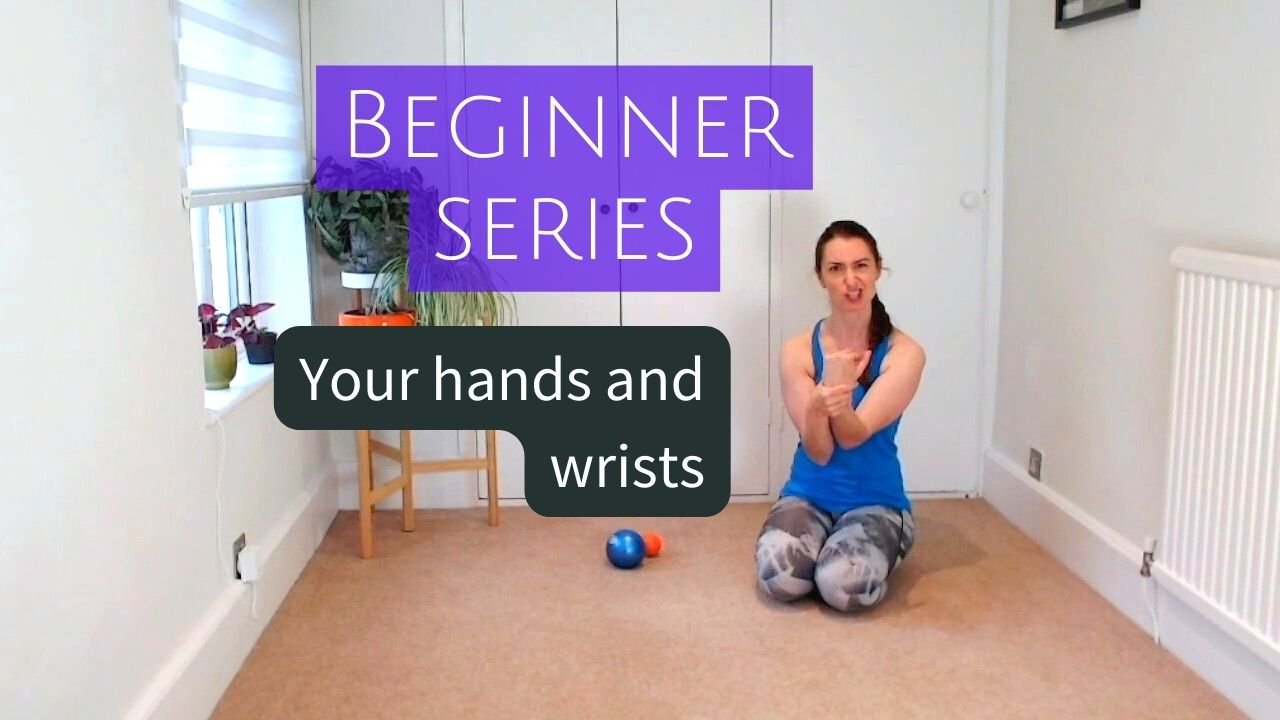
Class 1: Your hands and wrists (20 minutes)
‘Weak-feeling wrists’ are super common. This class will give you some options to explore, especially if you struggle placing weight on your hands in positions like downward dog and plank.
Access all five classes in this series by joining the free mini class membership.
You will need:
A light weight. In this video, I use a 1kg soft pilates ball – anything from a can of beans to a dumbbell.
A small ball (a tennis ball, or massage ball will do).
Access all five classes in this series
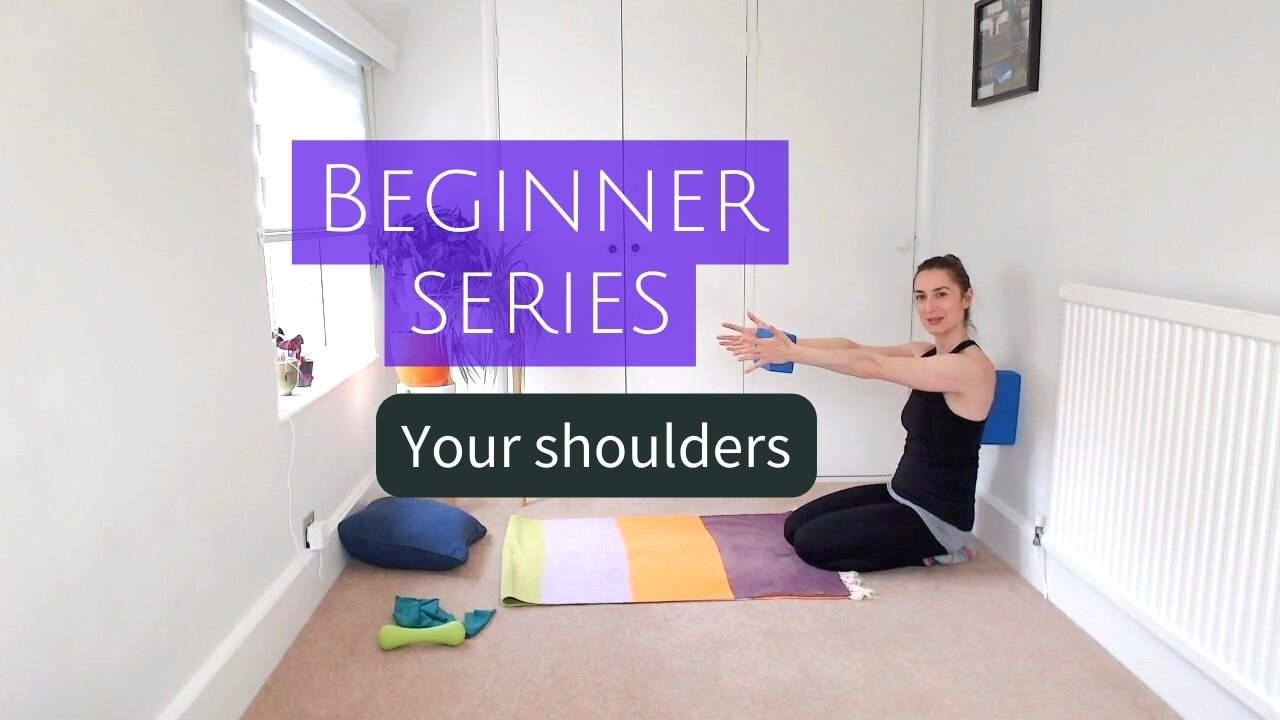
Starting from scratch, getting back into a routine, or wanting to try a new style of class? This beginner series is for you.
We make out that moving our bodies is difficult:
No time
Can't do that
Foot won't go there
Do what with the arms?!
Breathe in, fold forward, breathe out, bend knees
Roll out the mat, put on the kit
But, it's raining
Forget about being ‘good’ for a moment and throw getting it ‘right’ to one side.
Take a few minutes to check in with yourself and explore some low, moderate, and high-energy movements.
“I’m having trouble holding a plank position because my wrists do not feel strong enough”.
Yes, tell me about it!
Not only have I learned how to deal with my own ‘weak-feeling wrists’ over the years (and succeeded in ditching the wrist tape, wrist straps, and wrist supports), having wrists that don’t ‘feel strong enough’ is such a common experience that I decided to share a whole host of ideas in an attempt to help you out.
This post is part of a series designed to give you more options than:
‘Just skip it’
‘Put your knees down’, or
‘Do child’s pose instead’
Because? We’re adults goddammit! We can deal with things and learn to do stuff we used to find too difficult.
You can start this series in any order, you don’t need to perfect one set of options before trying out the next. Simultaneously working on mobility and strength, plus learning to adapt what you need to adapt, is a solid approach for most people without an acute injury. (Do your wrists feel like they’re about to fall off? You need a doctor, not a yoga teacher.)
If your wrists feel weak, taking part in a floor-based movement (or fitness) class will probably be a frustrating experience. Even in beginner-level classes, you are likely to find many positions that require you to place some bodyweight through your hands, like:
table (all fours) and cat-cow
downward dog and upward dog
plank and push-up.
If you have trouble holding (or starting in) any of these positions, you are presented with limited options to make things more manageable:
Skip it
Spend less time there and/or
Bend your knees/place your knees down on the floor.
All of these options are valid. They might suit you and what you are trying to achieve perfectly well, and they could be very appropriate ways to keep your body moving while coping with a flare-up, or accommodating an injury. They are not options to be scoffed at, or to make you feel less than.
However (really just a nice way to avoid saying ‘but’), if these are your limited options simply because you don't know what else you could try, keep reading.
This blog series is going to give you some extra and alternative options to consider.
I've been delving into the murky world of internet forums (I have my reasons) and came across a thread on the modern source of all wisdom (Mumsnet) that began with:
'I realise this is a ridiculous question but I’ve never really ‘got’ yoga. I’ve tried a good 3/4 times with Adriene [the YouTube sensation] and even though I am so keen to love it I just haven’t.
But my question is how should it feel? Just stretchy? There was one pose where I had to hook one knee then put my hands behind it and pull which felt very stretchy in my hamstring but I was a bit like ‘oh is this right?’ - it wasn’t painful just different.'
There isn't anything ridiculous about this question, or the replies to it. In fact, I think this one small corner of the internet succeeds in pointing out many of the conflicting ideas and strange assumptions that are widely (and over-confidently) shared about yoga.
A little anatomy knowledge can go a long way
I teach a lot of very smart people and yet, a lot of these people lack a basic understanding of how their bodies work.
Why? Because most of us weren’t taught this stuff. Only a small amount of human anatomy and physiology is taught at school; a little more is taught at upper secondary level if you opt to take a GCSE in PE, but — as someone who only really discovered that they could enjoy anything remotely sporty (let alone develop a ‘physical education’) until their mid-twenties — I certainly didn’t opt for one of those.
Anatomy can be a very dry topic with lots of complex and hard to remember names. But — having learned a lot about bodies and how they work — I also know that gaining knowledge about ourselves can go a long way, especially if it's relevant to who we are, the lives we lead, the activities we do, the ideas and beliefs we currently hold.
Knowing more about our body (the workings of its many muscles and joints, plus all the other amazing stuff it gets on with in the background) can help us make sense of how our body feels (and how we feel in our body).
If getting our nerd on wasn't reason enough, that knowledge can also save us time by helping us to make more informed choices about how we move.
Are your hamstrings a mystery?
It is very common for people to think about their hamstrings in terms of a feeling.
When I recently asked my class to define what the hamstrings were, their responses were general (both in sensation and in terms of location):
"That's easy. They're the things that hurt when I bend forward."
"They're the things at the top of the back of my thighs."
I would wager that every single yoga and movement teacher the world over has heard people talk more about their hamstrings than almost any other topic.
And yet, these words crop-up over and over again: tight, sore, stretch, more.
I think the hamstrings seem to feel like more of a problem because what they are and what they do remains a mystery to most people.
It might be time to set some modest goals
Last month, I left the city I called home for 10 years (Oxford, UK) and moved abroad (Nijmegen, NL). It’s been a pretty challenging time, so I have been putting into practise something I am generally useless at: sticking to modest goals (which is not to say that I'm great at sticking to grand goals either).
This is an insight into what I usually do...
Step 1: the ‘yay’ moment = energy! motivation! drive! do all the things!
Step 2: grind, grind, grind = overwork in all areas
Step 3: exhaustion = become a grumpy slug
Step 4: rest = do nothing (anxiously and resentfully)
Return to Step 1
I'm tired just listing that.
I got serious about overturning this habit in 2019 and then the pandemic happened, life sh*t happened, and I had to renege on that promise to myself out of necessity for a bit.
Well, it's now feels like time to get back on track.
How? By setting some modest goals, which—as ever—is somewhat easier said than done...
These 7 yoga moves won’t take your cycling to the next level
You'd be forgiven for believing the blogs telling you things like: these '7 yoga moves will take your cycling to the next level'. (Yep, my words were made unrealistically aspirational by the Red Bull staff writer, but it’s their job to get clicks so… whevs.)
The truth? There is no perfect routine*
*Sorry Not Sorry
Your priorities when getting back from a bike ride should be (in this order):
Refuelling
Getting out of those bib shorts
Taking a shower
[Probably uploading your ride, viewing your stats, and checking your Strava notifications are in there somewhere, but I’m going to pretend we don’t care about all that.]
I like to keep things practical and true to the demands of everyday life. I certainly don't need yet another thing to fit into my schedule. Trying to squeeze in an extra hour of movement after a ride is often (read: nearly always) unrealistic for me.
Start small (nothing fancy)
I find that having a set idea of something we should be doing often gets in the way of doing anything at all.
We are given advice on what we should be doing from all corners of the internet.
You’ve seen the forums, you’ve read the Tweets: You need to stretch more! Have you tried foam rolling? Yoga, pilates and the ubiquitous ‘improve your core strength’ appears to be the answer to everything. Sure, all of those things might help. Sure, they might help you. But how are on earth are you going to fit that in when you’ve ridden your bike all day?
For better and worse, the new year brings with it a lot of expectations.
I love working towards goals and I fully back anyone who is driven to take personal responsibility for the things they can influence and change. But we've all heard the anecdote: lots of people take out a gym membership in January and rarely attend past February.
Why? Because most people try to make too big a change, too frequently, too soon. (Yep, I’m in the ‘most people’ category too).
Unrealistic expectations set us up to fail (or fall asleep) at the first hurdle.
Small changes in behaviour that are repeated (and scaled up) over time allow new patterns of behaviour to form so that new habits can stick.