• Free beginner's series
    • 2026 class schedule
    • Class membership
    • Cyclists course
  • Sign In My Account
Menu

Becci Curtis Yoga

Street Address
City, State, Zip
Phone Number

Your Custom Text Here

Becci Curtis Yoga

  • Online classes
    • Free beginner's series
    • 2026 class schedule
    • Class membership
    • Cyclists course
  • Sign In My Account

Turning 30

July 23, 2017 Becci Curtis
View fullsize Two loves: yoga and cycling
View fullsize Wise words found on the yoga class door
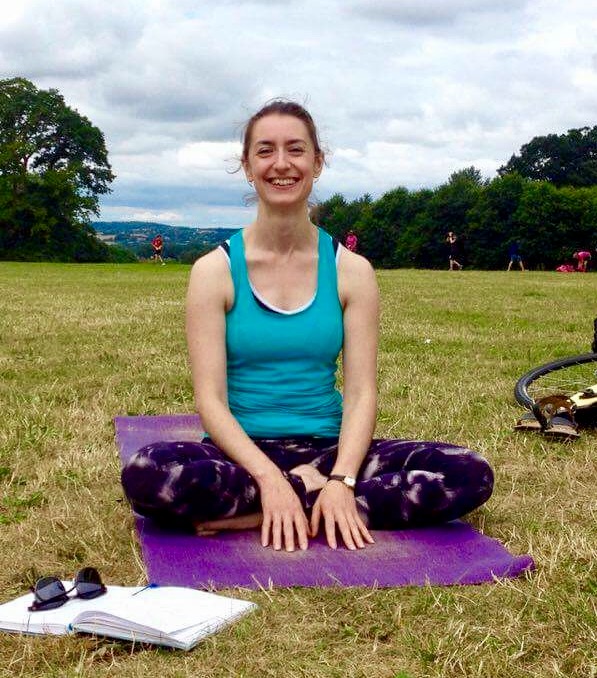
View fullsize Outdoor Yoga in South Park, Oxford
View fullsize British Wheel of Yoga Spectrum Magazine

Reflections on 15 years of yoga practice

As of this month, I've officially spent half my life practising yoga. It sounds like a fact to pat myself on the back with. Do I get a badge now? Can I cash in some kind of intermediate level yogi chip? 

When somebody asks me how long I've been practising, the reaction is usually a genuine "Wow, that's amazing", or a sarcastic "Great, good for you". The first response tends to come from a person who is new to yoga and has fallen in love with it a bit. Someone for who 15 years seems long enough to master whatever it is they're finding difficult, or a huge amount of time to continue enjoying whatever it is they're enjoying.

The second response tends to come from someone who knows I'm a yoga teacher, and wants to make it clear to me (and anyone else in earshot) that they think yoga is load of rubbish and that I'm a deeply flawed individual.  

Silent disinterest is the third response of course, but in these situations the question never comes up.

For me, when I think about yoga in terms of how long I've been practising, I'd class my reaction as 10% wow, 60% sarcasm and 30% disinterest: I never set out to practice yoga, especially for this long, so the yoga part of my life feels more like an accident than an achievement. I clearly don't think yoga is rubbish, but I do think the practice can only ever reflect the individual taking part in it, and I don't mind telling you that I am deeply flawed (yeah, who knew right?!). Lastly, despite writing about it (!), I'm just not that interested. Time spent doing anything, is not really a measure of anything but the time spent doing it. 

What I am interested in is how I have spent that time, what I have learned (and still have to learn) and why I continue to practice - because continuing to do something purely out of habit is not a practice in my view - it's just a thing that is repeatedly done.

When thinking about my relationship with yoga over the past 15 years, I also have to ask myself what is just the coming of age. My life didn't magically become easy when I discovered yoga. I did not suddenly become wise, or at peace with myself. I do feel more at ease, more wise and more at peace with myself than I did at 15, but I expect that most people do - with or without yoga, we grow up.

So really, all I can do is consider how my practice has changed as a symptom of how I have changed, not the other way around. Perhaps, at 60, I will change my mind about this, but 60 is a long way off and I hope I'm right in thinking that this blog post won't matter much then.

15

Books in the library. It was actually a Pilates book that set me off. Hours spent trying breathing exercises dangling my legs off the edge of the bed. A yoga book with an old lady standing on her head. I wanted to do that.

I practised every single day in the quiet of the evening, my sister spying on me through the net curtain of my bedroom door. It was the occasional giggle that gave her away. 

I didn't know what I was doing, or why, I just did it. It made me feel good. I didn't have the best childhood, or the worst, but it definitely could have been better.  Although I wouldn't have recognised this at the time, with hindsight, I think yoga helped carve a protective space for myself where I was the one in control. 

19

University. I discover Ashtanga. It was disgusting. I loved it.

My first Ashtanga class saw me barely make it through the standing sequence. I was weak, wobbly and sweating all over, but then came the seated sequence and my natural flexibility made me feel like I was pretty good at it. This is what kept me coming back. I wanted to get better. 

Inside and outside of that yoga class, I was regimented, unforgiving of any mistakes I made, and trying harder and harder to be perfect at whatever it was I considered myself worth being perfect at (or, whoever it was I considered myself worth being perfect for). I lived in my head. My body was for looking at and for making me feel bad. 

I think the routine and demanding physicality is why I was so attracted to Ashtanga, but this was the bind, and it's a bind I continue to see in my own students: on one hand, Ashtanga made my body useful, it made me feel stronger (both physically and mentally) and gave me confidence. On the other hand, I made my Ashtanga practice a punishment, an exercise in self-discipline that ascended any self-discipline that is helpful. I used it to reinforce the extremes of what I considered good and bad about myself.

It seems ironic to me now that the flexibility I praised within my body was so absent from the mental picture I had of myself and of others. 

23

Back to university. Life was very different and very difficult and, after trying to do everything and succeeding for a short time, I realised it was ok to do nothing and fail for a short time. I stopped beating myself up with yoga (asana specifically) because I didn't have the time, energy, or the money - I was not regularly practising at home at this point.

I practised when I could, sometimes I enjoyed it, sometimes I didn't.

25

10 years down the line and yoga was still a part of my life. My practice was not as punishing as it once was, but I still got a kick from looking at other practitioners and seeing that I could do a particular posture 'better' than them, or that I couldn't, and withstanding the insecurity that followed. 

I got talking to my long-standing teacher about teacher training. It's not something I'd ever thought about, but the seed was now planted.

26

Teacher training. Yoga philosophy and discovering that I'm no longer allergic to the stuff. My view of what yoga 'is' is challenged and changed. My view of who I am and how I want to live is challenged and changed. Is ever-changing.

I start engaging with the yoga world and find out that it's just as fucked up as the real world. Because we're in it. Because we're human.  

28

Find out that I love teaching. Find out that the way I teach, and consider my role as a teacher,  is ever-changing too. Teaching forces me to interrogate my own assumptions, be more open, experiment, become more comfortable with failure and not knowing. 

Navigate the the business of teaching yoga and question how to maintain integrity in a shiny, magpie, yoga world. Start by rejecting and mentally lambasting 'bad' teachers and 'bad' teaching decisions. Quickly realise everyone's just trying to find their own way and doing what they think is right. Decide just to go by what feels right for me and allow myself to make mistakes. Be honest about those mistakes. Don't assume my mistakes are the mistakes of other people. Commit to my own standards. Let those standards evolve.

All of this can only ever be a work-in-progress. 

Today

15 years since dangling my legs off the edge of the bed, reading books. My practice is not without humour and a healthy dose of self-derision, but it is earnest and becoming increasingly so. The way I practise and the way I live is one and the same. It seems like a cliché, but everything is yoga to me. Yoga is just another word for living; for trying to live, for trying to stay alive, for trying to be alive.

I used to be very solitary, and the way I viewed my practice was very solitary too. In some ways, being on your own and inhabiting your own view of the world is easier. I used to joke about running away to live in the forest on my own. This had once seemed like the only way to get by. 

How I relate to others, and the way I interact with other people is now far more important to me and my practice, than touching my forehead to my shins ever was. If I can have any insight into the future, it seems to me that this is where my practice is going. Has been going.

What do I know now that I didn't at 15? Everything and nothing.  

Everything is valid. Nothing is fixed. 

If I had any advice I thought worthy of giving, it would be this:

Change your mind all the time. Don't hold on to being in the right. Move. Be moved. 

In Practice Room, Living Room Tags Ashtanga, Self-practice, Aging, British Wheel of Yoga, Yoga Teacher
← New Year, New You, and other nonsenseA 15 minute yoga sequence for cyclists →
A yoga teacher smiles at people joining the online class.

Subscribe to my monthly newsletter

Connect your body and your brain by learning how to move more freely without getting changed.

"Shut up [insert your much loved but perpetually annoying person’s name here]! Can’t you see I'm trying to do yoga!”

Thank you for subscribing to my monthly newsletter.

To prove that I’m worth the space in your inbox, keep browsing, then check your email, and confirm your subscription.

Browse

Topics
  • Philosophy
  • Self-practice
  • Cycling
  • Online yoga
  • Anxiety
  • Community
  • Stress
  • Injury
  • Yoga Teacher
  • Ashtanga
  • Creativity
  • Self-care
  • Abuse
  • Aging
  • Balance
  • Beginners
  • Breathing
  • British Wheel of Yoga
  • Flourishing
  • Goal setting
  • Kleshas
  • New Year
  • Rest
  • Strength
  • Suffering
  • Weak wrists
  • Anatomy
  • Anger
  • Baddha Konasana
  • Bharadvajasana
  • Brexit
  • Consent
  • Ethics
  • Exhaustion
  • Flexibility
  • Hamstrings
  • Home practice
  • Kriya
  • Mindfulness
  • Mobility
  • Movement kit
  • Neglect
  • Orchid
  • Pelvic Tilts
  • Resources
  • Salutations
  • Social justice
  • Sport
  • Sutras
  • Training
  • Finding Room 1
  • Housekeeping 1
  • Living Room 13
  • Practice Room 15
  • Reading Room 2

Most recent

Featured
Modest goals for sustainable change

For better and worse, the new year brings with it a lot of expectations.

I love working towards goals and I fully back anyone who is driven to take personal responsibility for the things they can influence and change. But we've all heard the anecdote: lots of people take out a gym membership in January and rarely attend past February.

Why? Because most people try to make too big a change, too frequently, too soon. (Yep, I’m in the ‘most people’ category too).

Unrealistic expectations set us up to fail (or fall asleep) at the first hurdle.

Small changes in behaviour that are repeated (and scaled up) over time allow new patterns of behaviour to form so that new habits can stick.

Read more →
What's your movement mood?

We make out that moving our bodies is difficult:

  • No time

  • Can't do that

  • Foot won't go there

  • Do what with the arms?!

  • Breathe in, fold forward, breathe out, bend knees

  • Roll out the mat, put on the kit

  • But, it's raining

Forget about being ‘good’ for a moment and throw getting it ‘right’ to one side.

Take a few minutes to check in with yourself and explore some low, moderate, and high-energy movements.

Read more →
Do your wrists feel weak? Part 2: Strengthen

“I’m having trouble holding a plank position because my wrists do not feel strong enough”.

Yes, tell me about it!

Not only have I learned how to deal with my own ‘weak-feeling wrists’ over the years (and succeeded in ditching the wrist tape, wrist straps, and wrist supports), having wrists that don’t ‘feel strong enough’ is such a common experience that I decided to share a whole host of ideas in an attempt to help you out.

This post is part of a series designed to give you more options than:

  • ‘Just skip it’

  • ‘Put your knees down’, or

  • ‘Do child’s pose instead’

Because? We’re adults goddammit! We can deal with things and learn to do stuff we used to find too difficult.

You can start this series in any order, you don’t need to perfect one set of options before trying out the next. Simultaneously working on mobility and strength, plus learning to adapt what you need to adapt, is a solid approach for most people without an acute injury. (Do your wrists feel like they’re about to fall off? You need a doctor, not a yoga teacher.)

Read more →
Do your wrists feel weak? Part 1: Mobilise

If your wrists feel weak, taking part in a floor-based movement (or fitness) class will probably be a frustrating experience. Even in beginner-level classes, you are likely to find many positions that require you to place some bodyweight through your hands, like:

  • table (all fours) and cat-cow

  • downward dog and upward dog

  • plank and push-up.

If you have trouble holding (or starting in) any of these positions, you are presented with limited options to make things more manageable:

  1. Skip it

  2. Spend less time there and/or

  3. Bend your knees/place your knees down on the floor.

All of these options are valid. They might suit you and what you are trying to achieve perfectly well, and they could be very appropriate ways to keep your body moving while coping with a flare-up, or accommodating an injury. They are not options to be scoffed at, or to make you feel less than.

However (really just a nice way to avoid saying ‘but’), if these are your limited options simply because you don't know what else you could try, keep reading.

This blog series is going to give you some extra and alternative options to consider.

Read more →
"How should yoga feel? Just stretchy?"

I've been delving into the murky world of internet forums (I have my reasons) and came across a thread on the modern source of all wisdom (Mumsnet) that began with:

'I realise this is a ridiculous question but I’ve never really ‘got’ yoga. I’ve tried a good 3/4 times with Adriene [the YouTube sensation] and even though I am so keen to love it I just haven’t.

But my question is how should it feel? Just stretchy? There was one pose where I had to hook one knee then put my hands behind it and pull which felt very stretchy in my hamstring but I was a bit like ‘oh is this right?’ - it wasn’t painful just different.'

There isn't anything ridiculous about this question, or the replies to it. In fact, I think this one small corner of the internet succeeds in pointing out many of the conflicting ideas and strange assumptions that are widely (and over-confidently) shared about yoga.

Read more →
Speed date your hamstrings

A little anatomy knowledge can go a long way

I teach a lot of very smart people and yet, a lot of these people lack a basic understanding of how their bodies work.

Why? Because most of us weren’t taught this stuff. Only a small amount of human anatomy and physiology is taught at school; a little more is taught at upper secondary level if you opt to take a GCSE in PE, but — as someone who only really discovered that they could enjoy anything remotely sporty (let alone develop a ‘physical education’) until their mid-twenties — I certainly didn’t opt for one of those.

Anatomy can be a very dry topic with lots of complex and hard to remember names. But — having learned a lot about bodies and how they work — I also know that gaining knowledge about ourselves can go a long way, especially if it's relevant to who we are, the lives we lead, the activities we do, the ideas and beliefs we currently hold.

Knowing more about our body (the workings of its many muscles and joints, plus all the other amazing stuff it gets on with in the background) can help us make sense of how our body feels (and how we feel in our body).

If getting our nerd on wasn't reason enough, that knowledge can also save us time by helping us to make more informed choices about how we move.

Are your hamstrings a mystery?

It is very common for people to think about their hamstrings in terms of a feeling.

When I recently asked my class to define what the hamstrings were, their responses were general (both in sensation and in terms of location):

"That's easy. They're the things that hurt when I bend forward."
"They're the things at the top of the back of my thighs."

I would wager that every single yoga and movement teacher the world over has heard people talk more about their hamstrings than almost any other topic.

And yet, these words crop-up over and over again: tight, sore, stretch, more.

I think the hamstrings seem to feel like more of a problem because what they are and what they do remains a mystery to most people.

Read more →
The slow yoga blog RSS

A life practice. A life practising.

About

Becci

Contact

Privacy policy

Quick links

How should yoga feel? Just stretchy?

Do your wrists feel weak?

Free beginner series

Membership

Your first class?

Sign-in to your account

Terms of service + FAQs


Copyright © 2015- Becci Curtis